THIS COUNTY SITE IS AVAILABLE FOR ADOPTION
If you would like to learn more about becoming a County Coordinator and a part of The CAGenWeb Project, or if you have any other questions relating to this county, please read our Policies & Procedures and then contact our State Coordinator.
The CAGenWeb Project sincerely thanks the dedicated volunteers who devoted time and effort toward making this site a successful one:
Jacquie Ansell, County Coordinator 1996-1999
Edward A. Black Sr., County Coordinator 1999-2009
Steven Moore, County Coordinator 2010-2011
Leah Allen, County Coordinator 2011-2017
State Coordinator: Elizabeth E. Bullard
Assistant State Coordinator: Marc Irish
Assistant State Coordinator: Bob Jenkins

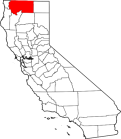
Siskiyou County was created on March 22, 1852, from parts of Shasta and Klamath Counties, and named after the Siskiyou mountain range. Parts of the county's territory were given to Modoc County in 1855.
The county is the site of the central section of the Siskiyou Trail, which ran between California's Central Valley and the Pacific Northwest. The Siskiyou Trail followed Native American footpaths and was extended by Hudson's Bay Company trappers in the 1830s. Its length was increased by "Forty-Niners" during the California Gold Rush.
After the discovery of an important gold strike near today’s Yreka, California, in 1851, prospectors flooded the area. This was described in detail by Joaquin Miller in his semi-autobiographical novel Life Amongst the Modocs.
In the mid 1880s, the construction of the Central Pacific Railroad along the Siskiyou Trail brought the first wave of tourism. Visitors were drawn by the county’s many summer resorts, and to hunt or fish in the largely untouched region. The Southern Pacific railroad, the successor to the Central Pacific, called its rail line “The Road of A Thousand Wonders.”
In the early 1940s, Siskiyou County was home to the semi-serious State of Jefferson movement, which sought to create a new state from several counties of northern California and the adjoining counties of southern Oregon. The movement has seen a revival in recent years.
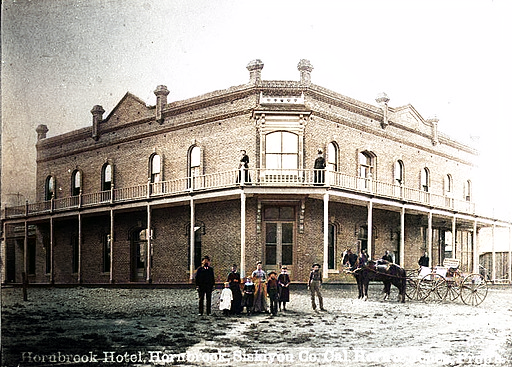
The origin of the word Siskiyou is not known. It may be Chinook word for a "bob-tailed horse" or, as was argued before the State Senate in 1852, from the French Six Cailloux (six stones), a name given to a ford on the Umpqua River by Michel LaFrambois and his Hudson's Bay Company trappers in 1832. Others claim the Six Cailloux name was appropriated by Stephen Meek, another Hudson's Bay Company trapper who discovered Scott Valley, for a crossing on the Klamath River near Hornbrook.
Source: Wikipedia
The CAGenWeb Project
CAGenWeb Brochure (pdf file)
The USGenWeb Project
USGenWeb Special Projects
The WorldGenWeb Project
County Message Board (Ancestry.com)
County Forum (Genealogy.com)

Josephine County, OR (north)
Jackson County, OR (north)
Klamath County, OR (north)
Modoc (east)
Shasta (south)
Trinity (south)
Humboldt (southwest)
Del Norte (west)
This site was updated last on 21-Feb-2019 14:23
The Legal Stuff:
Website Design © 2017 The CAGenWeb Project. All Rights Reserved.
Copyright Notice: The content of this website is a collective work that may contain some private contributions. Said private contributions are so-noted and copyright of those private contributions belongs to the original author. Under no circumstances is any data from this site to be re-published in any fashion without the express written consent of its owner.
Disclaimers:
This site is not in any way affiliated with any governmental body or agency.
Links to some external websites have been provided as a convenience and for informational purposes only. The act of pointing, via hyperlink, to any website by this website does not in any way whatsoever constitute an endorsement or an approval by The CAGenWeb Project or The USGenWeb Project or any of their affiliates or any of their administrators of any product, service, or opinion that may be appear on that website.
The CAGenWeb Project and The USGenWeb Project and their affiliates and their administrators make no guarantee whatsoever about the content and/or quality of any research material that may be provided by any genealogical or historical researcher that may be listed on this website. The CAGenWeb Project and The USGenWeb Project and their affiliates and their administrators make no guarantee whatsoever about the expertise of any genealogical or historical researcher that may be listed on this website. The listing on this website of any genealogical or historical researcher does not in any way whatsoever constitute endorsement of that genealogical or historical researcher by The CAGenWeb Project or The USGenWeb Project or any of their affiliates or any of their administrators.