

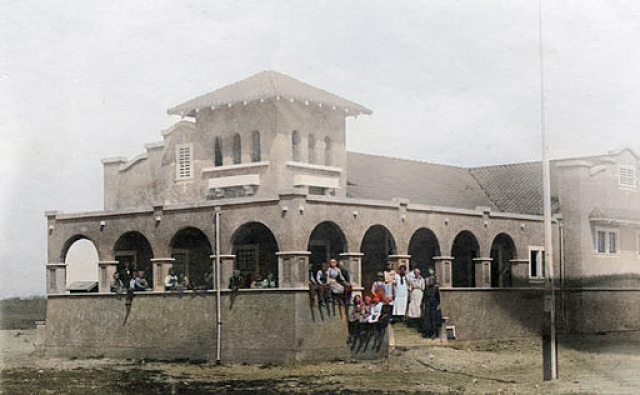
Winton Grammer School 1915
Merced
County is available for adoption.
If you have a local connection to Merced County or
an interest in California in general,
Please consider joining the CAGenWeb as a County
Coordinator.
Contact Bob
Jenkins if you are interested.
In addition:, we would appreciate any
contribution that you would like to make to this
site: biographies, obituaries, birth,
marriage, death info, grave info,
photographs....etc
Merced
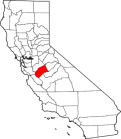
County, California
Merced County lies in the northern San Joaquin Valley and takes its name from the Merced River, originally called El Río de Nuestra Señora de la Merced (“River of Our Lady of Mercy”) by Spanish explorer Gabriel Moraga in 1806. Before European contact, the region was home to Yokuts peoples, who lived in small, mobile communities throughout the valley.
Spanish & Mexican Period (1800s–1840s)
Spanish expeditions passed through the valley only
occasionally, but Moraga’s 1806 expedition formally named the
river and region.
During Mexican rule, four major land grants
were issued between 1841–1844 in what would become Merced
County:
- Rancho Orestimba y Las Garzas
- Rancho Panoche de San Juan y Los Carrisolitos
- Rancho San Luis Gonzaga
- Rancho Sanjon de Santa Rita
These ranchos became the earliest organized settlements and later anchor points for American-era communities.
American Settlement & County Formation (1840s–1850s)
Trappers and explorers—including Jedediah Smith, Ewing Young, Kit Carson, and Joseph Walker—passed through the area in the early to mid‑1800s, mapping routes and reporting on the valley’s resources.
After California became part of the United States, population increased rapidly.
- Merced County was officially formed on April 19, 1855, carved from Mariposa County.
- In 1856, part of its territory was transferred to the newly created Fresno County.
Agricultural Growth & Community Development (Late 1800s–1900s)
The arrival of irrigation systems and the railroad transformed Merced County into a major agricultural region. Farming, ranching, and later dairy and crop production shaped the county’s economy and settlement patterns. Many families who arrived during this period established multigenerational roots that remain central to local genealogy research.
Modern Era
Today, Merced County includes the cities of Merced, Atwater,
Los Banos, Livingston, and several rural communities. It
remains a culturally diverse agricultural center with deep
historical ties to early Native peoples, Spanish exploration,
Mexican ranchos, and pioneer settlers.